The quote says “$0.004 a minute.” You do the mental math on your monthly minutes, like the number, sign. Then the first invoice arrives and it’s nothing like your estimate.
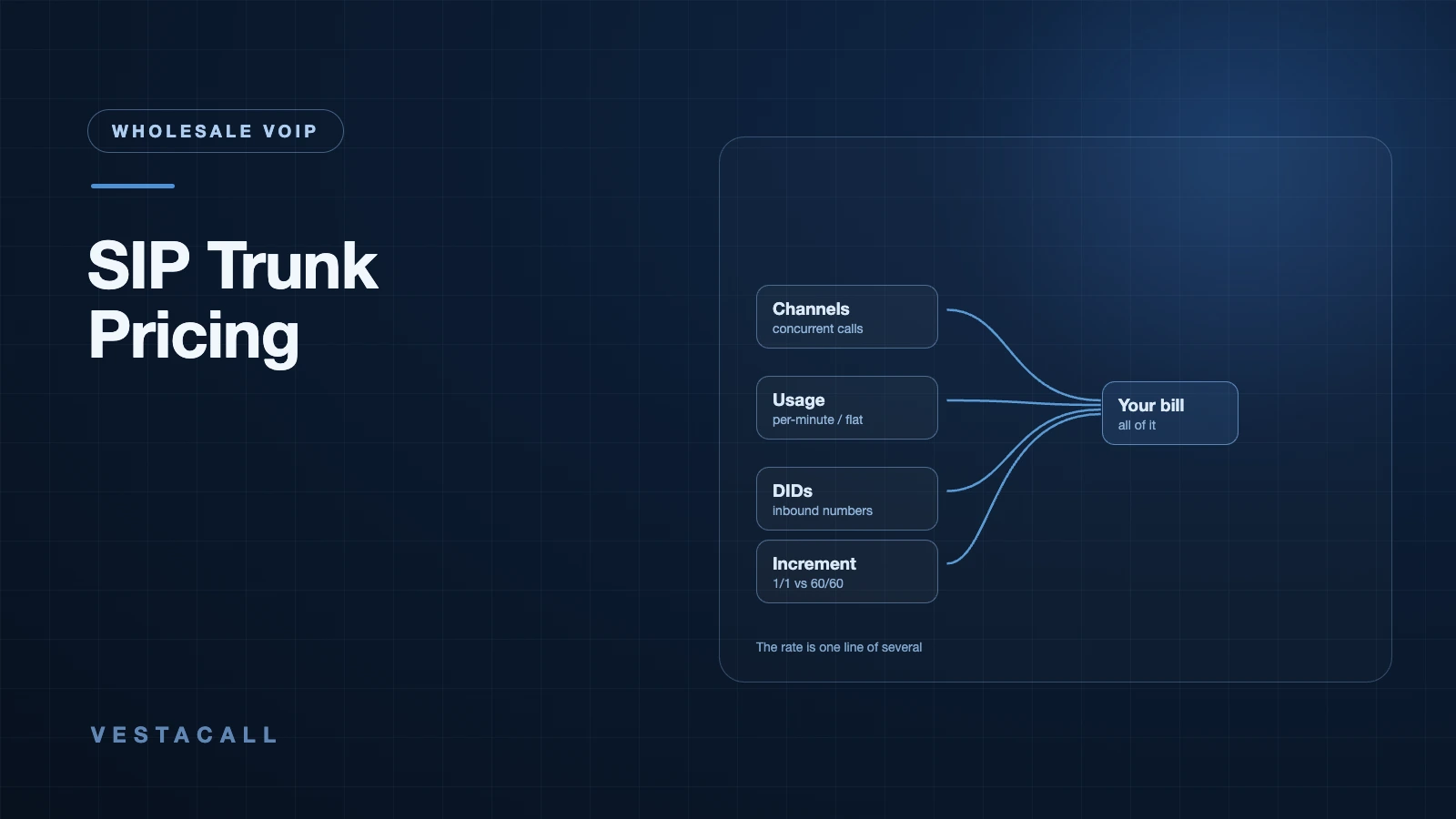
The per-minute rate wasn’t wrong. It was just one line of a bill with four or five lines.
What you’re actually paying for
SIP trunk pricing has parts, and providers love to lead with the flattering one. The real structure:
- Capacity — channels (concurrent calls). How many calls can run at once.
- Usage — per-minute or flat. The minutes, priced per destination, or a fixed allowance.
- Numbers — DIDs. Monthly cost per inbound number (DID).
- Extras. Setup, porting, minimum commitments.
- The billing increment. How all that usage gets rounded.
Miss any of these and your estimate is fiction. Let’s take the two that trip people up most.
Channels: size the peak, not the total
A channel is one simultaneous call. Ten channels means ten calls at once — the eleventh waits.
The common mistake is sizing channels to total volume. A team placing five thousand calls a day panics and buys hundreds of channels. But if they’re never all on the phone at the same instant, they might need thirty. You size channels to busy-hour concurrency — the most calls in progress at once — plus some headroom. Under-buy and calls block at your busiest moment; over-buy and you’re paying for silence.
Per-minute vs flat: it depends on your shape
Per-minute charges for what you use, per destination. Flexible, cheapest for low or spiky volume, and honest about variation.
Flat / “unlimited” charges a fixed fee per channel for an allowance. Predictable, and usually cheaper once your volume is high and steady.
The deciding factor isn’t how much you call — it’s how evenly. Heavy, predictable traffic favors flat. Variable or seasonal traffic favors per-minute, where you don’t pay for capacity you didn’t use. Pick for your traffic shape, not the plan name.
The increment, again — because it matters most
Here’s the line that quietly rewrites your bill: the billing increment. 1/1 bills per second. 60/60 rounds every call up to a full minute.
If your traffic is short calls — dialer campaigns, notifications, quick confirmations — 60/60 rounding can double your effective cost. The $0.004 headline paired with 60/60 billing can cost more than $0.0045 billed per second. Same-looking rate, very different invoice.
So when you compare two SIP providers, put the increment next to the rate. A low rate with 60/60 billing, per-DID fees, and a minimum commitment can lose to a slightly higher rate with 1/1 billing and no extras.
Getting an honest quote
Ask for the whole structure, in one place: channel pricing, usage model, per-DID cost, any setup or port fees, the minimum, and the increment. If a provider will only talk about the per-minute rate, that’s usually because the rest of the bill is where the margin hides.
VestaCall prices wholesale SIP trunking with the increment and the structure made explicit, so the quote matches the invoice. Want a real number for your traffic shape? Talk to the wholesale team with your busy-hour peak and your top destinations.